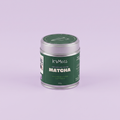
What is matcha, really?
Matcha is finely stone-ground powder made from shade-grown green tea leaves. Unlike regular tea - where you steep the leaves and throw them away - with matcha you whisk the whole leaf into water and drink it. That means you get everything the leaf has to offer: more antioxidants, more L-theanine, and that signature vivid green colour.
How it’s different from green tea
Brewed green tea is an infusion; matcha is the leaf itself. Because the plants are shaded for weeks before harvest, they produce more chlorophyll and more L-theanine - the amino acid behind matcha’s calm, focused energy. Gram for gram, you’re getting a far more concentrated cup.

The calm-energy effect
Matcha contains caffeine - around 70mg in a 2g serving - but it’s paired with L-theanine, which slows how quickly that caffeine hits your system. Instead of the sharp spike and crash of coffee, you get a smooth lift that holds for four to six hours. Same alertness, none of the jitters.
Ceremonial vs culinary grade
Ceremonial grade is the youngest, highest-quality leaves, meant to be whisked with water and sipped on their own. Culinary grade is coarser and more bitter - made to stand up to milk, sugar and baking. KaMoss is ceremonial grade, so it’s smooth enough to drink neat but still shines in a latte.
How to drink it
Sift a scoop (about 2g) into a bowl, add water just off the boil (around 80°C), and whisk in a brisk zig-zag until frothy. That’s a traditional bowl. Prefer a latte? Pour it over steamed milk and sweeten to taste. Either way, you’re about two minutes from a better morning.