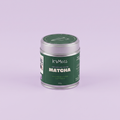
Matcha
What is matcha?
Matcha is finely stone-ground powder made from shade-grown green tea leaves. Unlike ordinary tea, where you steep the leaves and discard them, matcha is the whole leaf whisked into water - so you drink everything it contains, giving it a far more concentrated flavour, colour and nutritional profile.
Is matcha good for you?
Matcha is naturally rich in antioxidants and L-theanine, and provides caffeine that releases slowly for calm, steady energy rather than a spike and crash. It’s a simple, low-sugar way to start the day - though, as with anything caffeinated, we’d suggest enjoying it in moderation.
What does matcha taste like?
Good ceremonial matcha is smooth, vegetal and naturally sweet, with a savoury depth known as umami and none of the harsh bitterness of lower grades. KaMoss is mellow enough to drink whisked with just water, and rounds out beautifully in milk.
How much caffeine is in matcha?
A standard 2g serving of KaMoss contains roughly 70mg of caffeine - a little less than a shot of espresso. Because it’s paired with L-theanine, that caffeine is released more gradually, so you get focus without the jitters.
What is L-theanine?
L-theanine is an amino acid found naturally in tea leaves. It promotes a relaxed, alert state and slows the absorption of caffeine, which is why matcha delivers smooth, sustained energy instead of a sharp rush followed by a crash.
What are antioxidants, and which are in matcha?
Antioxidants are compounds that help protect your cells from everyday oxidative stress. Matcha is especially high in catechins - particularly EGCG - a group of antioxidants concentrated in green tea leaves, and because you consume the whole leaf you take in more of them than with brewed tea.
Where did matcha originate?
Matcha traces its roots to China, where whisking powdered tea began centuries ago, long before it was refined in Japan's tea ceremony. Tea plants grown for matcha are shaded for several weeks before harvest to boost chlorophyll and L-theanine, then the leaves are steamed, dried and stone-ground into powder.
How can I tell I’m drinking good-quality matcha?
Look for a vivid, almost jewel-like green (dull or yellowish powder signals lower quality or age), a smooth rather than bitter taste, and a fine, silky texture. Ceremonial-grade matcha like KaMoss should be pleasant whisked with water alone - no sweetener needed to mask it.
Why is matcha best whisked rather than drowned in dairy?
Whisking with water lets you taste the matcha itself, and some research suggests certain proteins in dairy milk can bind to matcha’s antioxidants. You don’t have to go without milk - a splash or a plant-based option works wonderfully - but we’d always recommend tasting it whisked first.
How should I store my matcha to keep it fresh?
Keep your tin sealed, away from light, heat and moisture - a cool, dark cupboard is ideal. Matcha is delicate, so avoid leaving it open or storing it above the hob, and use it within a few weeks of opening for the brightest colour and flavour.
KaMoss
What makes KaMoss different?
We make one thing and obsess over it: a single tin of ceremonial-grade matcha, done properly. No confusing lineup of grades and formats, no filler leaves or bulking agents - just genuinely good matcha at a price you can justify drinking every day.
Do you really only sell one product?
Yes. KaMoss is a 50g tin of ceremonial matcha, and that’s deliberate. Focusing on a single product means we can put everything into sourcing and quality rather than spreading ourselves thin across a big catalogue.
Where is KaMoss matcha sourced?
Our matcha is shade-grown and harvested from the first spring flush, when flavour and nutrients are at their peak, then stone-ground in small batches. You can read more on our Our Story page.
How do I make a bowl of KaMoss at home?
Sift about 2g (one scoop) into a bowl, add a little water just off the boil - around 80°C, never fully boiling - and whisk briskly in a zig-zag motion for 15-20 seconds until frothy. Enjoy as is, or top with hot or cold milk for a latte. There’s a fuller guide on our Recipes page.
Is KaMoss ceremonial or culinary grade?
KaMoss is ceremonial grade - the youngest, highest-quality leaves, smooth enough to whisk with water and sip on their own. It still performs brilliantly in a latte if that’s how you prefer it.
Orders, Shipping & Returns
Do you offer a discount for new customers?
Yes - join our email list and we’ll send you a code for 20% off your first order. Look out for the sign-up pop-up, or enter your email in the footer.
Where do you ship?
We currently ship across the UK. If you’re ordering from elsewhere, get in touch before placing your order and we’ll let you know what’s possible. (Please confirm your actual shipping regions here.)
How long will my order take to arrive?
Orders are typically dispatched within 1-2 working days, with standard UK delivery arriving within 3-5 working days of dispatch. (Please confirm your actual dispatch and delivery times here.)
How long does the matcha stay fresh once opened?
For the best colour and flavour, we recommend using your matcha within 4-6 weeks of opening and keeping the tin sealed in a cool, dark place. Unopened, it will keep well until the best-before date on the tin.
What is your returns policy?
Because matcha is a consumable food product, we can only accept returns on unopened tins. If anything arrives damaged or isn’t right, contact us within 14 days of delivery and we’ll put it right. (Please confirm your actual returns policy here.)
How do I get in touch?
We’d love to hear from you. Email us at Love@Kamossmatcha.com and we’ll get back to you as soon as we can.