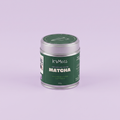
One of the first questions people ask before switching to matcha is simple: how much caffeine is in it, and will it keep me up? The short answer is that matcha has a moderate amount of caffeine that behaves very differently from coffee. Here is the detail, so you can work out how it fits your day.
How much caffeine is in matcha?
A standard 2g serving of matcha contains roughly 70mg of caffeine. For context, that is a little less than a single shot of espresso (around 80mg) and well under a double or a large filter coffee. A stronger 3g scoop pushes it closer to 80mg. So matcha sits comfortably in the middle: more than a cup of green tea, less than most coffees.

Why matcha caffeine feels different
The number on its own does not tell the full story. Matcha is naturally high in L-theanine, an amino acid that promotes a calm, alert state and slows how quickly caffeine is absorbed. Instead of a fast spike followed by a crash, you get a gentler release that many people find lasts four to six hours. That is why matcha drinkers talk about calm focus rather than feeling wired. We go deeper on this in matcha vs coffee.
Will it keep me awake at night?
Because caffeine can linger for hours, a good rule of thumb is to enjoy your last bowl by early afternoon if you are sensitive to it. A morning bowl and an early-afternoon top-up suit most people well. If you are very caffeine-sensitive, start with a smaller 2g serving and see how you feel.

Matcha caffeine vs coffee, tea and energy drinks
Roughly speaking, a bowl of matcha gives you less caffeine than a double espresso or a large coffee, more than a cup of steeped green tea, and it does it without the sugar found in most energy drinks. Crucially, the L-theanine means the same amount of caffeine tends to feel smoother than it would from coffee.
Does the type of matcha change the caffeine?
To a degree, yes. Younger, higher-grade leaves tend to carry a little more caffeine, and how much powder you use makes the biggest difference of all. A light 2g scoop sits at the lower end, while a generous 3g scoop or a double-strength latte pushes it up. Steeped green tea, by contrast, gives you far less, because you are only drinking what leaches into the water rather than the whole leaf. If you want a milder cup, simply use a little less powder and more water.
Getting the dose right
Start with one 2g bowl in the morning. If you want a longer lift or a bigger drink, use a slightly larger scoop or make a latte. Keep it to the earlier part of the day, drink water alongside it, and you will get steady energy without the jitters. New to making it? Follow our guide on how to make matcha, and check the FAQs for more on caffeine and storage.