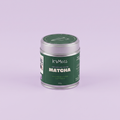
Here is the part most people get wrong: matcha did not begin in Japan. It began in China. The practice of grinding tea leaves into a fine powder and whisking them into water developed during the Song dynasty, around a thousand years ago. Japan adopted it later and refined it into the ceremony the world now recognises.
It is a heritage we are quietly proud to carry, because our matcha comes from where the whole thing started.

Where did matcha come from?
Tea has been drunk in China for thousands of years, but powdered tea is a more specific invention. During the Song dynasty, roughly the tenth to thirteenth centuries, tea was pressed into cakes, roasted, ground to a fine powder on a stone mill and then whisked into hot water with a bamboo whisk until it foamed.
That is matcha. The method, the mill, the whisk and the froth all existed in China long before matcha was associated with anywhere else. Song dynasty tea culture even held whisking competitions, judged partly on the quality and staying power of the foam.
How did matcha reach Japan?
Through Buddhism. Chinese Chan Buddhist monasteries used whisked powdered tea to stay alert through long hours of meditation, and Japanese monks studying in China took the practice home with them.
The monk Eisai is generally credited with carrying tea seeds and the whisking method to Japan at the end of the twelfth century. He also wrote a treatise on tea and health that helped the drink take root among the Japanese aristocracy and clergy.

Why is matcha associated with Japan?
Because of what happened next in each country. In China, tea culture gradually moved towards steeped loose leaf tea, and the whisked powdered method faded from everyday life. In Japan, it did the opposite: it was preserved, formalised and elevated into chanoyu, the tea ceremony, shaped in the sixteenth century by figures such as Sen no Rikyu around principles of harmony, respect, purity and tranquillity.
So Japan is where matcha was refined into a ceremony, and that is the image most of the world carries. But the drink itself, the grinding and the whisking, arrived there from China.
What the tradition still gives us
A surprising amount of what you do in your kitchen is unchanged. Stone milling is still the method that produces a powder fine enough to suspend in water rather than sink. Shading the plants before harvest, which deepens the colour and raises L theanine, is still how the best leaves are grown. And the zig zag whisking motion that builds a fine foam is the same one being judged in Song dynasty tea contests.
It is worth remembering when you spend two minutes making a bowl on a Tuesday morning. That small ritual has been more or less intact for a thousand years, which is a rare thing in a kitchen. Our guide to how to make matcha walks through the method.

Where KaMoss matcha comes from
Ours comes from China, where whisked powdered tea began. The leaves are shade grown and harvested from the first spring flush, when flavour and nutrients peak, then stone ground in small batches into the ceremonial grade powder that goes into every 50g tin.
We think the origin story is worth telling properly rather than glossing over. You can read more about why we make exactly one product on our Our Story page, or learn what separates the grades in ceremonial vs culinary grade matcha.