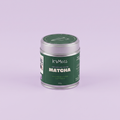
Matcha and green tea come from exactly the same plant, but they are not the same drink. The short answer: matcha is the whole leaf, stone ground into powder and whisked into water, so you drink the entire leaf. Green tea is an infusion, where you steep the leaves and throw them away. That one difference changes the caffeine, the flavour, the colour and how it makes you feel.
Here is the full comparison, so you can work out which one belongs in your morning.

Matcha vs green tea at a glance
| Matcha | Green tea | |
|---|---|---|
| What you drink | The whole leaf, as powder | An infusion, leaves discarded |
| Caffeine | Around 70mg per 2g bowl | Around 20mg to 30mg per cup |
| Preparation | Sifted and whisked, about 2 minutes | Steeped, about 3 minutes |
| Colour | Vivid jewel green | Pale yellow green |
| Flavour | Rich, creamy, savoury umami | Light, grassy, more delicate |
| Growing | Shaded for weeks before harvest | Usually grown in full sun |
Why is matcha so much stronger?
Two reasons. The first is simple maths: with matcha you consume the entire leaf rather than whatever leaches out into hot water, so nothing is left behind in a strainer.
The second is how the plants are grown. Matcha leaves are shaded for several weeks before harvest, which starves them of direct sunlight. The plant responds by producing more chlorophyll, which gives matcha its electric green colour, and more L-theanine, the amino acid behind that calm, focused feeling. Green tea grown in full sun never develops the same concentration.

Does matcha taste like green tea?
They are related but distinctly different. Green tea is light and grassy. Good ceremonial matcha is thicker and creamier, with a savoury depth called umami and a natural sweetness on the finish. Poor quality matcha tastes harsh and bitter, which is usually a sign of older leaves or a coarse grind rather than anything wrong with matcha itself. Our guide to ceremonial vs culinary grade matcha explains what to look for.
Which should you drink?
Choose green tea if you want something light, low in caffeine and effortless to make. Choose matcha if you want a genuine lift in the morning, a richer drink, and the calm focus that comes from caffeine paired with L-theanine. Many people who switch from coffee land on matcha precisely because it gives the alertness without the spike and crash, which we cover in matcha vs coffee.
How to make matcha if you have only ever brewed tea
The habit to unlearn is steeping. Matcha does not dissolve, it suspends, so it needs whisking rather than soaking.
Sift about 2g into a bowl to break up clumps, add water just off the boil at around 80C, then whisk briskly in a zig zag until a fine foam forms. It takes under two minutes. The full method is in our guide on how to make matcha.
The bottom line
Green tea is a gentle daily cup. Matcha is the concentrated version of the same plant: more caffeine, more L-theanine, more flavour and a far more vivid colour, because you are drinking the leaf rather than water that has passed through it. If you have only ever had green tea, a proper ceremonial bowl is a genuinely different experience.